
How to Avoid Costly Mistakes in Industrial Equipment Cleaning
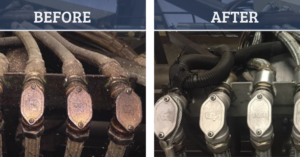
Dirty equipment is an easy problem to see, but getting it cleaned is easier said than done. You know it’s time to get your equipment cleaned, but there’s hesitation: the wrong cleaning method could cost you.
Water in a control panel, a scorched motor housing, a warped gasket that turns a routine clean into a repair bill nobody signed off on- those can be more expensive than the contamination itself.
That’s the real risk with industrial equipment cleaning. Standard methods like pressure washing, solvents, and wire brushing weren’t built for sensitive machinery. They work fine on a concrete floor; on a VFD or a switchgear panel, however, they can do significant damage.
Industrial equipment cleaning is the process of removing grease, soot, grime, or other contamination from machinery without damaging what’s underneath it. Get the method right, and you protect the equipment. Get it wrong, and you’re paying for the mistake twice.
Here’s what you need to know before you clean sensitive equipment or call someone in to do it.
What You’ll Learn
- Which cleaning methods are safe for sensitive equipment like VFDs, electric motors, cable trays, and control panels
- How to spot a method that’s going to do more harm than good before you use it
- What happens during a proper equipment cleaning or restoration job
- When cleaning can save you from a full equipment replacement after a fire or flood
- How to schedule cleaning around a shutdown
Where does industrial equipment cleaning make the biggest difference?
If your equipment involves wiring, sensors, moving parts, or contamination in places you can’t easily reach, this is where non-destructive cleaning earns its keep.
Ideal Areas for Delicate Industrial Equipment Cleaning
- Fire- or flood-damaged electrical panels, where water or corrosion is already a risk
 you can’t afford
 you can’t afford
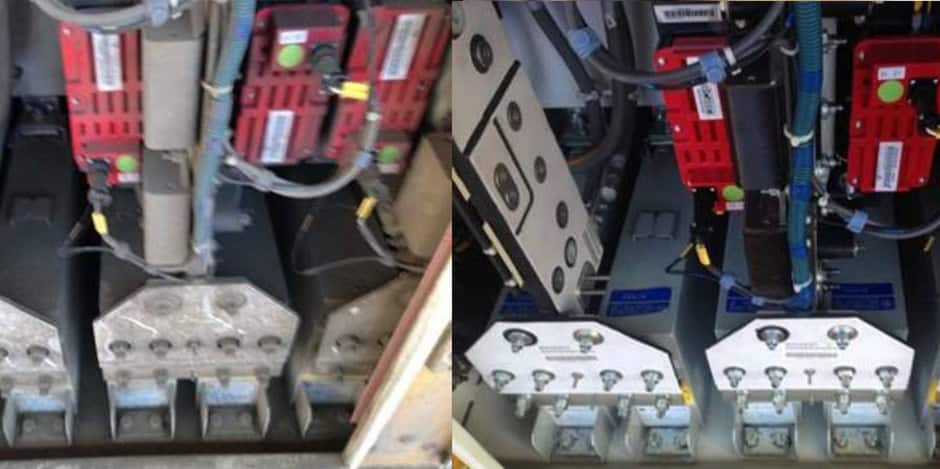
- Smoke-damaged VFDs, switchgear, or PLCs, where soot and carbon buildup sit close enough to live components that the wrong method could mean a short circuit
- Contaminated industrial machinery caked in oil, carbon, or adhesive residue that regular degreasers push around instead of removing
- Delicate mechanical components or moving parts like exhaust fans that lose tolerance if they’re scraped, sanded, or scrubbed
- Equipment tucked into confined or hard-to-reach spaces, where teardown isn’t practical and manual cleaning can’t reach
If any of that sounds like what’s sitting in your plant right now, the method chosen matters as much as getting it clean at all.
Why does non-destructive cleaning matter for sensitive equipment?
Non-destructive cleaning matters because the alternative isn’t just messier; it’s expensive.
Water and chemical cleaning methods leave residue, trigger corrosion, or introduce moisture exactly where you don’t want it: inside wiring, windings, and sensors. Non-destructive methods skip all of that.
- No water, solvents, or residue left behind
- No risk to wiring, windings, or sensors
- No need to disassemble large or static equipment
- Safe for use near electrical components, with the right precautions
- Fewer shutdowns and less unplanned maintenance
- Documentation that satisfies environmental and insurance requirements
If you’re comparing providers, this is where it pays to work with an established industrial cleaning company Ontario manufacturers already rely on. The method a crew defaults to tells you a lot about how much risk they’re willing to put on your equipment.
What happens during an equipment cleaning or restoration job?
Most of the hesitation around calling someone in comes down to not knowing what they’re going to do to your equipment. Here’s how it works at Wickens:
1. Assessment. In disaster situations, our team can arrive for assessment the same day. A technician will review the equipment, contamination, and risk factors, then provide you a rundown of what to expect for the job.
2. Containment and prep. Once our team is on site, the work area gets isolated, PPE goes on, and if the equipment is still connected or partially live, that gets accounted for before anything is cleaned.
3. Custom cleaning. The method gets matched to the equipment and the contamination, not the other way around. That might mean one approach on a control panel and a different one on a mechanical component down the line if needed.
4. Documentation and handoff. Photo records, reporting, and a summary of what was done. If insurance is involved, this is the paperwork that supports a restore decision instead of a replacement one.
What cleaning methods are ideal for cleaning sensitive equipment?
Not every method belongs on every piece of equipment. Here are the best methods for cleaning sensitive equipment and why they work.
Dry ice blasting. Dry ice pellets hit the surface, lift the contaminant, and sublimate on contact, so nothing but the mess you’re removing leaves the equipment. This is the default method for cleaning anything with wiring, sensors, or components that can’t tolerate moisture.
Soda blasting. A lightly abrasive option for surfaces that can take some contact and don’t need the precision dry ice offers. Soda blasting is better suited to structural components and painted surfaces than anything with electronics.
Vacuum extraction. Runs alongside blasting to capture debris at the source instead of letting it spread to equipment nearby.
Containment and PPE. In an active facility, containment barriers and site-specific safety practices keep the work isolated from whatever else is running that day.
How the options compare
| Method | Contact with surface | Moisture or residue | Typical downtime | Risk to electronics | Best for |
|---|---|---|---|---|---|
| Dry ice blasting | None, non-abrasive | None, sublimates on contact | Minimal, often done in place | Low, safe near live components with the right precautions | Panels, motors, VFDs, turbines, electronic cleaning, conveyors, paint booths and overhead chain conveyors, steel decking and trusses, printing equipment, and more |
| Soda blasting | Light abrasive contact | Some residue, needs cleanup | Low to moderate | Moderate, better for non-sensitive surfaces | Structural, anilox rollers, and painted surfaces |
| Hand cleaning | Direct contact | Often needs chemicals or solvents | High, labour-intensive | Varies with the chemicals used | Small components, light contamination |
| Full disassembly and cleaning | Complete component removal | Varies by method | Highest, can take days | Reassembly introduces its own risk | Deep contamination, full overhauls |
What kind of equipment can be cleaned using delicate industrial cleaning methods?
Electrical and control equipment
Switchgear, electrical panels, VFDs, and PLCs are the equipment most people are nervous about cleaning, and for good reason. Soot, dust, and carbon tracking sitting on live components can cause arcing or a short if the wrong method is used. These are also where non-destructive methods matter most, since there’s no room for moisture or abrasive contact anywhere near live wiring.
Mechanical equipment
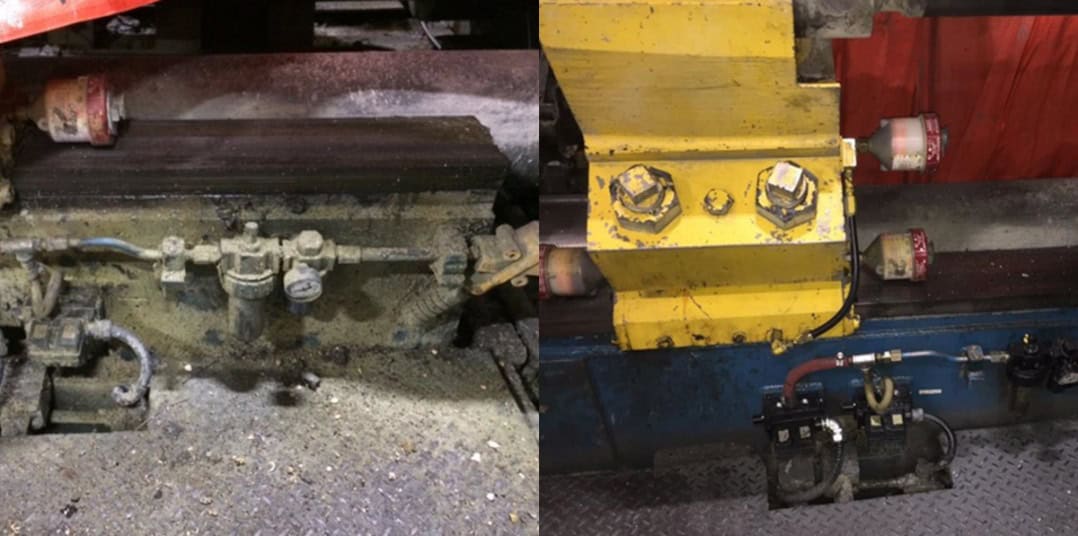
Motors, pumps, compressors, turbines, and fan housings or fin fans build up grease, carbon, and particulate over time, and that buildup is one of the more common causes of bearing wear and overheating. Cleaning them without disassembly keeps them in service instead of sitting in pieces on a shop floor for a week while parts get pulled and reinstalled.
Food-grade and specialty equipment
Conveyors, food processing lines, commercial oven cleaning, and HVAC systems or ductwork all have a lower tolerance for chemical residue, since anything left behind becomes a contamination problem of its own. In food processing especially, a cleaning method that solves one problem and creates another isn’t a solution. Non-destructive cleaning avoids that trade-off entirely.
If your equipment doesn’t fit neatly into one of these categories, that’s fine. The method matters more than the category it’s filed under.
What should you do when equipment gets hit by fire, flood, or contamination?
Disaster timelines don’t leave much room for figuring things out as you go, and the equipment involved is usually the most expensive part of the loss.
- Fire and smoke damage. Soot and carbon settle into components fast, and the longer it sits, the more of a problem it becomes.
- Flood or water exposure. Corrosion starts working immediately. Every hour of delay is equipment you might not be able to recover.
- Chemical, grease, or oil contamination. Whether it’s a spill or a slow buildup, the wrong cleanup method can drive contaminants deeper instead of out and away.
- Particulate buildup during an extended shutdown. Equipment that sits idle collects dust and debris that becomes a bigger job the longer it’s left alone.
In all four situations, the same question comes up: is this equipment worth saving, or are you looking at a replacement? That’s not always obvious from a walkthrough, which is why a fast, honest assessment matters more than a quick estimate.
Need equipment looked at today? Get an equipment assessment and find out what’s salvageable before you commit to replacement.
How do you avoid being in a disaster scenario in the first place?
Not all equipment damage comes from a single bad event. In high-dust or heavy-industrial environments, particulate buildup on motors and bearings is one of the most common causes of unplanned failure, and it happens slowly enough that most people don’t notice until something breaks. Both can be cleaned easily with dry ice.
A scheduled cleaning program catches buildup before it turns into downtime. Instead of reacting to a failure, you’re working from a plan:
- Cleaning gets scheduled around your production calendar, not squeezed in during a crisis
- Bearings and motors run longer with less particulate working against them
- Shutdown windows are a natural time to get equipment cleaned while the line is already down
If your plant already has a shutdown scheduled, this is the kind of work that fits into it without adding extra downtime you didn’t plan for.
Planning a shutdown this season? Book your preventative maintenance window now and get equipment cleaned while the line is already down.
Frequently asked questions about industrial equipment cleaning
Do I need to disassemble equipment before it can be cleaned?
Usually not. Most industrial equipment, including motors and turbines, can be cleaned in place, avoiding the labour and reassembly risk that comes with a full teardown.
Will professional cleaning affect my equipment warranty?
No. Non-abrasive, chemical-free cleaning is typically the method manufacturers and insurers prefer, since it avoids the surface damage associated with more aggressive methods.
Can equipment cleaning help avoid a full replacement after a fire or flood?
In many cases, yes. Non-destructive cleaning combined with documentation can support a restore-rather-than-replace decision, which insurers and adjusters often prefer.
What’s the difference between equipment cleaning and full equipment restoration?
Cleaning removes surface contamination, like soot, grease, or particulate buildup. Restoration goes further. It means assessing whether the equipment is still safe and functional, cleaning it, and documenting the process so it can go back into service or support an insurance claim. Most work on sensitive machinery falls into the restoration category rather than a simple wipe-down.
Can sensitive components like VFDs, control panels, and switchgear be cleaned in place without removing them?
In most cases, yes. Non-abrasive methods reach into housings and enclosures without water or abrasive contact, so components can stay mounted and wired while they’re cleaned. Full removal is really only needed for the most severely contaminated units or where a component has to be inspected internally regardless.
What happens if contamination has been sitting since a shutdown or disaster?
Time matters, especially with soot, moisture, or corrosive residue, which keeps working on equipment the longer it’s left untreated. That’s part of why a same-day assessment matters. It gives a clear picture of what’s still salvageable before delayed contamination turns a cleaning job into a replacement.
Can equipment cleaning be scheduled around a planned shutdown?
Yes. Preventative cleaning is often scheduled during shutdown windows, including November and December, so equipment gets cleaned while the line is already down.
How long does an equipment cleaning or restoration project usually take?
It depends on the scope and the equipment involved, but many jobs are completed in a single day since components can often be cleaned in place. A time estimate is part of the same-day assessment.
Will your team coordinate directly with our insurance adjuster?
Yes. Wickens has experience working alongside adjusters and insurers, providing the documentation and reporting they need to support a restoration decision.
Let’s get your equipment back online
Dirty equipment is a problem you can see. Equipment cleaned with the wrong method is a problem you find out about later, usually at the worst time.
If you’ve got sensitive equipment that needs cleaning or restoring, Wickens will assess the job, walk your team through exactly what’s going to happen, and get your machinery back online – clean, compliant, and fully functional.
Get an equipment assessment or book your preventative maintenance window and stop guessing about what’s safe to clean.