

How Preventative Cleaning Extends Equipment Life
How Preventative Cleaning Extends Equipment Life
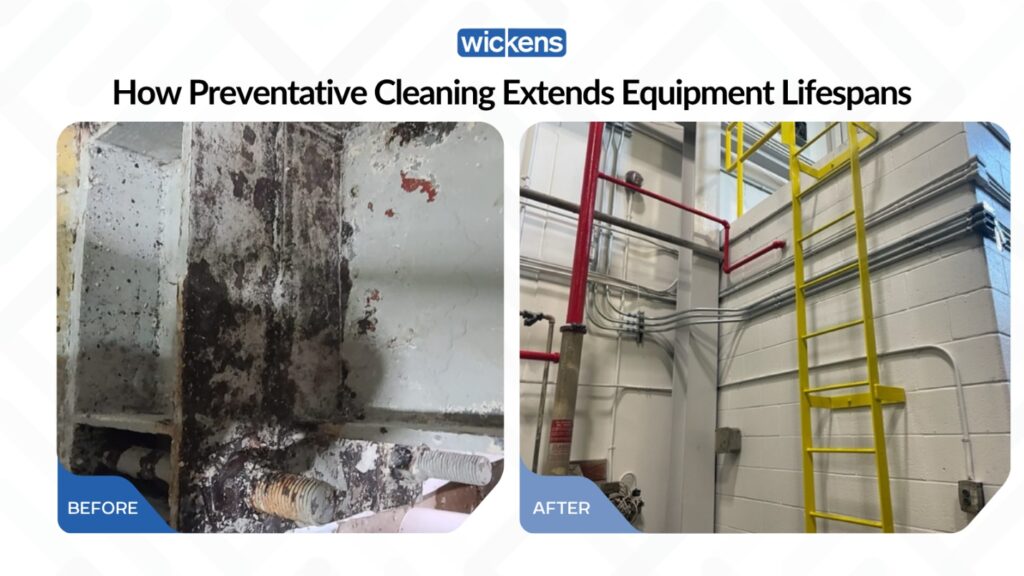 The fire started on an exhaust hood.
Inside a railway maintenance facility, exhaust hoods pull engine exhaust up and out of the building. Over time, a layer of diesel dust had settled on them. One day, heat from a locomotive’s exhaust was enough to ignite it.
The fire suppression system put it out quickly, but the bigger problem showed up afterwards, when it became clear that every hood, fan, and stack in the building was carrying the same dust and buildup. The fire wasn’t random; it was a warning of what would keep happening if cleanup wasn’t done quickly.
Our crew cleaned the entire exhaust system, working from three blast stations with articulating lifts, and the rail lines were back in service quickly – but the lesson remained. Most equipment failures that look sudden have been building for months, sometimes years.
So why does preventative cleaning extend equipment life?
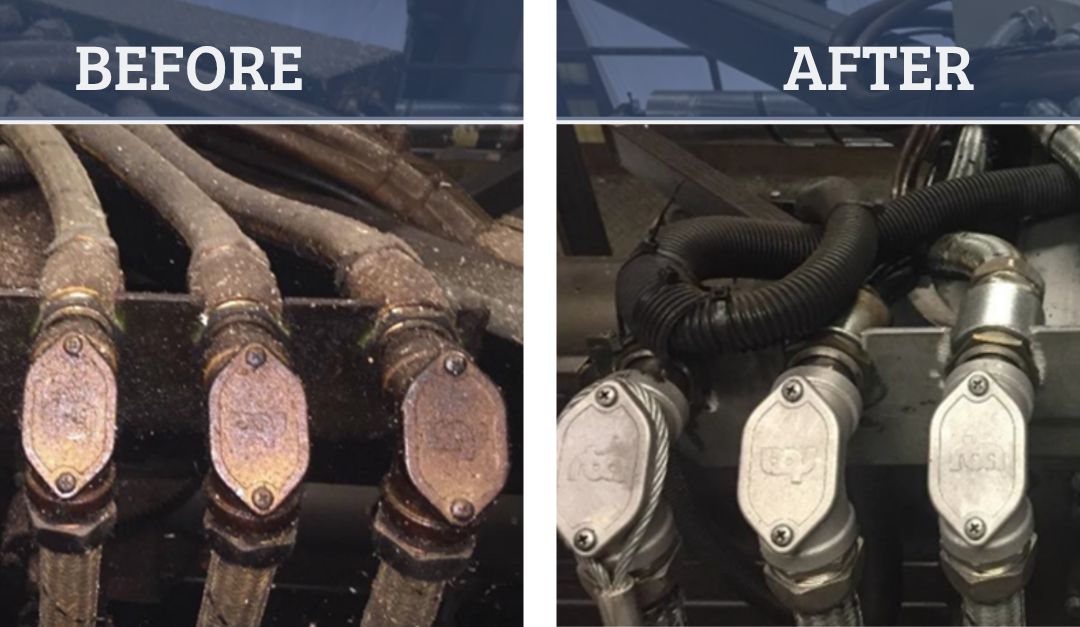
Preventative cleaning removes buildup before it causes overheating, friction, corrosion, electrical faults and contamination. Cleaning on a schedule, with the right method for each asset, is one of the most practical ways to reduce unplanned downtime, because equipment comes offline when you plan it to, not when it fails.
In this article, you’ll learn
- Why buildup is damage in progress
- What waiting until something breaks really costs you
- Why the cleaning method matters as much as the schedule
- How to build a preventative cleaning schedule around production
Buildup Is Damage in Progress
Dirt on a machine looks like a housekeeping problem at first: a bit of dust that hasn’t been wiped in a while. But it’s far more than that. Every layer of dust, grease, carbon, scale, or product residue is changing how that equipment runs.
- It holds heat. Dust on motors, drives, panels and transformers works like a blanket. Components that run hot age faster, and winding insulation breaks down sooner.
- It adds friction. Residue on conveyors, rollers and bearings makes equipment work harder for the same output. Parts wear faster and energy use climbs.
- It traps moisture. Contaminants hold water against metal, which leads to pitting and corrosion, especially in washdown areas.
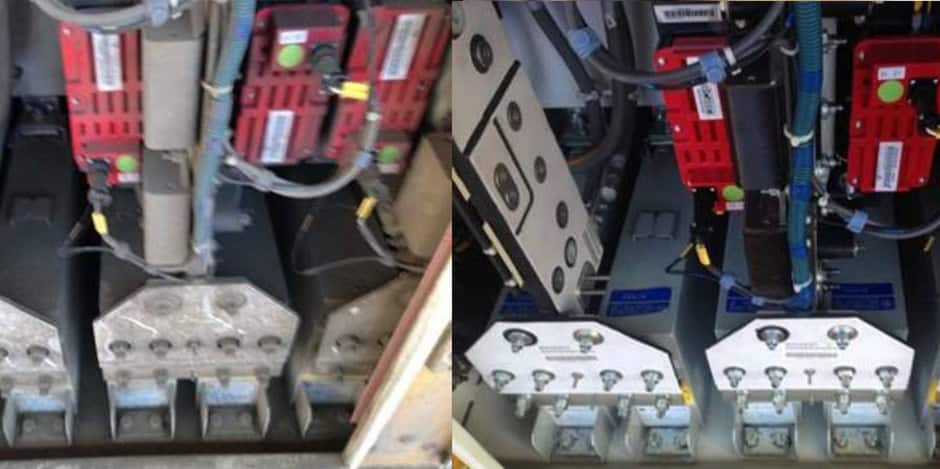
- It conducts. Carbon and conductive dust on electrical equipment can set up tracking and arcing. After a breaker failure at an Ontario hydro substation, the oily soot left on insulators, switches and wiring was a safety risk on its own.
- It chokes heat transfer. Fouled fin fans, economizers, and heat exchangers lose efficiency as buildup restricts airflow. Cleaning can improve fin fan cooler efficiency by 30%.
- It ends up in the product. At one food manufacturer, old paint inside storage hoppers broke down and started flaking into the food supply. The result was rejected shipments and a disrupted supply chain.
None of this happens overnight. That’s what makes it easy to ignore, and expensive when it finally shows up.
The Cost of Waiting Until Something Breaks
Waiting feels like the smart decision at first – nothing is broken, the line is running, and there’s always something more urgent that needs to be prioritized. Then, a motor trips mid-shift or an audit flags residue, and the bill arrives.
According to Siemens’ True Cost of Downtime 2024 report, unplanned downtime now costs the world’s 500 largest companies 11% of their revenue, about US$1.4 trillion a year. The average large plant loses 27 hours a month to unplanned stoppages. In automotive, a single lost hour can cost US$2.3 million.
Most plants aren’t running at that scale, but the math works the same way. When equipment fails without warning, you pay for:
- Lost production while the line is down
- Emergency labour, overtime, and rush parts
- Damage a planned clean would have prevented
- Rushed cleaning with whatever method is on hand, which can turn into a second repair (we covered that trap in How to Avoid Costly Mistakes in Industrial Equipment Cleaning)
Clean on your schedule, and it’s a line item. Wait for the breakdown, and you pay for the repair, the downtime, and the cleanup.
| Waiting for a breakdown | Cleaning on a schedule | |
|---|---|---|
| Who sets the timing | The equipment | Your production calendar |
| Downtime | Unplanned, often extended | Planned around shutdowns, nights or weekends |
| Costs | Emergency labour, overtime, rush parts | Predictable, recurring line item |
| Equipment life | Shortened by repeated stress and failures | Extended by consistent operating conditions |
| Risk | Missed orders, safety incidents, failed audits | Problems caught early during routine service |
Preventative cleaning won’t stop every failure, but it’s still one of the most practical ways to reduce unplanned downtime, as it moves maintenance onto your calendar.
The Right Clean, on a Schedule
When you clean the same equipment every quarter or every shutdown, the method matters as much as the timing.
A method that’s too aggressive wears down tolerances, coatings, and finishes a little more each time. A method that leaves moisture behind invites corrosion. Clean the wrong way often enough, and the cleaning itself starts shortening equipment life.
That’s why we offer multiple cleaning methods. Wickens started in the late 1990s as an equipment distributor, and over the years our clients kept asking us to take on more. Today our crews work with dry ice, soda, dustless, vacuum, laser, DOFF steam, abrasive blasting, and more. We choose based on the surface, the buildup, and the equipment.
What That Looks Like on a Real Job
- A food processing plant after a fire. We used DOFF steam for mobile equipment, cleaned in a designated clean room, and dry ice for stationary machines with exposed electrical components where water wasn’t an option. The plant resumed operations ahead of schedule.
- Storage hoppers at a food manufacturer. We field-tested soda and lime before choosing a specialized food-safe media that removed the paint without etching the surface. Technicians worked on rope access instead of scaffolding, inside negative pressure containment, with zero plant downtime.
- A hydro substation. We used micro pellets at lower pressure on delicate insulators and sensors and worked top-down so cleaned surfaces stayed clean.
Testing first and using the gentlest method that does the job isn’t caution for its own sake. It’s what lets you clean the same asset again and again without wearing it out.
How to Build a Preventative Cleaning Schedule
If your plant shuts down between Christmas and New Year’s, that window is closer than it looks. What gets cleaned in those few days shapes how the next 12 months run. Here’s how to plan it.
- Start with the equipment you can’t afford to lose. Bottleneck machines, electrical systems, and anything tied to product quality go to the top of the list.
- Write down what you’re seeing. Note the type of buildup, how fast it comes back, and any history of trips, temperature alarms, or quality issues.
- Set intervals by buildup, not breakdowns. Clean before buildup affects performance. High-use or high-contamination equipment may need monthly or quarterly service, while other assets only need an annual clean.
- Fit the work into downtime you already have. Shutdowns, changeovers, nights, and weekends all work. On one economizer cleaning job, the work was scheduled for three to five days, finished in three and a half, and the unit was back in service within a couple of hours.
- Track it and adjust. Compare operating temperatures, efficiency, energy use, and failure rates before and after each clean. Tighten or extend intervals from there.
Equipment Worth Putting on the Schedule
| Equipment | Common buildup | Signs it’s overdue |
|---|---|---|
| Motors, generators, stators, and rotors | Dust, oil, carbon | Rising operating temperature, insulation breakdown |
| Electrical panels, transformers, and VFDs | Conductive dust, debris | Hot spots, nuisance trips, arcing risk |
| Exhaust hoods, fans, and stacks | Diesel dust, grease | Visible residue, fire risk near heat sources |
| Fin fans, economizers, and heat exchangers | Dirt, deposits, grease | Reduced airflow, poor heat transfer, higher energy use |
| Moulds, dies, and hoppers | Release agents, residue, failing coatings | Product defects, contamination, longer cycle times |
| Conveyors and production lines | Grease, product residue | Drag, jams, sanitation concerns |
Some plants clean often enough that it makes sense to bring the capability in-house. A Hamilton manufacturer cut a mould cleaning job from an hour of hand washing to 11 seconds after adding its own dry ice blasting unit. We support both approaches, with contract cleaning at your facility and equipment rentals and packages for in-house teams.
Find It on Your Schedule
The railway fire was out in minutes, but the buildup responsible took years to accumulate. Most plants have something similar sitting on a hood, a motor, or a heat exchanger right now. The only question is whether you find it on a schedule or during a shutdown you didn’t plan.
With more than 30 years in industrial cleaning and a full range of methods, Wickens can walk your facility, flag the assets at highest risk, and recommend the right clean and interval for each. Our certified, safety-trained crews work around your production, including nights, weekends, and shutdowns, and every visit is documented with reporting and photos so you can see conditions change over time. Learn more about our industrial facility cleaning services.
Book a preventative cleaning assessment before your next planned shutdown or talk to an expert at 1-888-301-0044.
Frequently Asked Questions About Reducing Unplanned Downtime
How does preventative cleaning reduce unplanned downtime?
It removes buildup before it leads to overheating, jams, electrical faults or contamination. Because the work is planned around production, equipment comes offline on your schedule instead of during an unexpected breakdown.
How does preventative cleaning extend equipment life?
Buildup traps heat, adds friction, holds moisture, and can conduct electricity. Removing it regularly keeps equipment running cooler and cleaner, which slows wear and extends its service life.
How often should industrial equipment be cleaned?
It depends on the equipment, the environment and how fast buildup returns. High-use or high-contamination assets may need monthly or quarterly cleaning, while others only need annual service. Tracking conditions after each clean helps set the right interval.
Can industrial equipment be cleaned without shutting down production?
Often, yes. Many assets can be cleaned in place without disassembly, and work can be scheduled during shutdowns, changeovers, nights or weekends. Wickens has completed projects inside operating plants with zero production downtime.
Will repeated cleaning damage equipment?
Not when the method is matched to the equipment. Overly aggressive or water-based methods can wear surfaces or cause corrosion over time. Testing first and using the gentlest effective method protects equipment through years of regular cleaning.
Should we hire a cleaning partner or bring industrial equipment cleaning in-house?
Plants that need occasional or specialized cleaning usually benefit from a contract service. Plants that clean frequently may save by renting or buying equipment and training staff. Wickens offers both, along with guidance on which methods suit your equipment.

- How Preventative Cleaning Extends Equipment Life - October 15, 2026
- How to Avoid Costly Mistakes in Industrial Equipment Cleaning - September 23, 2026
- Choosing the Best Dry Ice Blasting Machine for Heavy-Duty Jobs - February 23, 2026
 you can’t afford


Recent Comments