
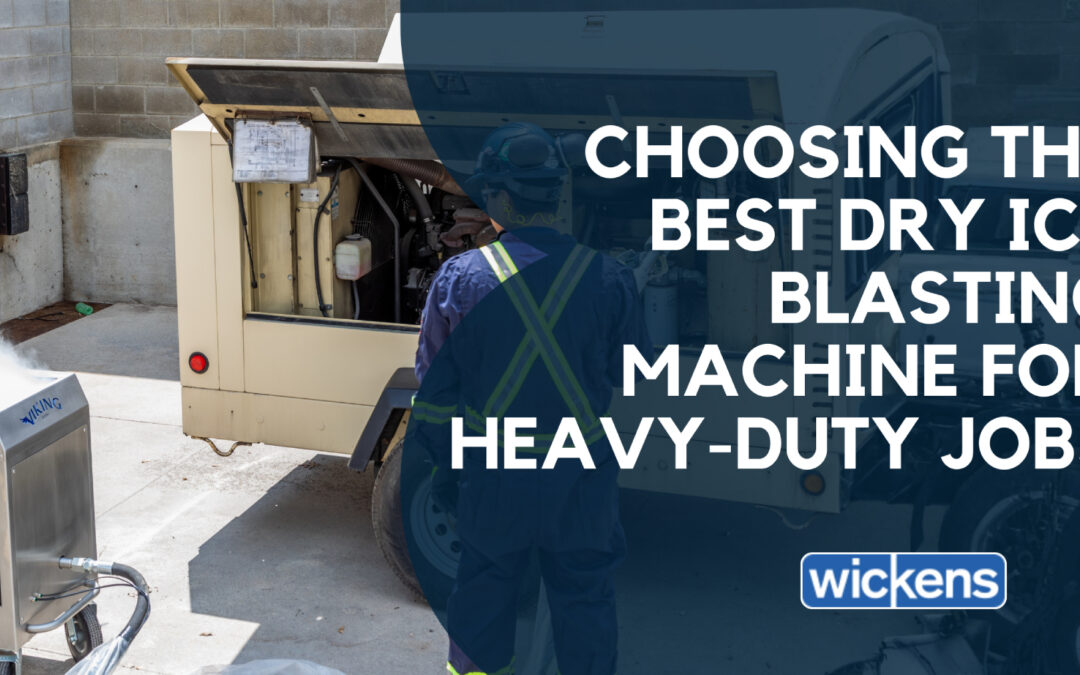
Choosing the Best Dry Ice Blasting Machine for Heavy-Duty Jobs
Choosing the Best Dry Ice Blasting Machine for Heavy-Duty Jobs
For contractors, manufacturers, and resellers, selecting the wrong dry ice blasting machine can cause serious setbacks: missed project deadlines, equipment returns, and mounting maintenance costs. Many units are engineered for controlled environments, not for the rough conditions found on active job sites or factory floors.
This guide breaks down what really matters when choosing a machine for high-demand applications. You’ll learn how to evaluate specs in context, avoid common pitfalls, and find a solution that delivers consistent performance and ROI, on day one and over the long term.
What You’ll Learn
- How to evaluate key specifications like PSI, CFM, hopper size, and feed rate based on your job type
- The differences between contractor, factory, and reseller uses for dry ice blasting equipment
- What to avoid when purchasing a dry ice blaster, including common pitfalls that reduce ROI
- Why build quality, maintenance access, and power compatibility are essential for industrial performance
- How the Viking Series meets the demands of rugged work environments

Why does equipment fit matter in heavy-duty environments?
Not every dry ice blasting cleaning machine is built for the realities you face.
You might’ve worked with equipment that clogged halfway through a shift, didn’t deliver the pressure you expected, or stalled your team with constant failures. For contractors, that leads to delays, rework, and frustrated clients. For industrial teams, it means production schedules fall apart. For resellers, a poor match turns into a returned unit, more service calls, and damage to your reputation.
The root of these problems is usually the same: the equipment was never meant for the environment.
Machines designed for clean, controlled settings often break down when exposed to the grit, pace, and unpredictability of real field conditions. Weak frames fail under transport, undersized air systems choke performance, and overly complicated design slows down progress. When uptime and reliability matter, there’s no tolerance for tools that can’t keep up.
Contractors need blasting machines that move quickly and hold up on-site. Factory and plant operators depend on equipment that runs consistently with minimal intervention. Resellers need to offer solutions that are easy to support and trusted by their buyers. A mismatch between machine and use case puts pressure directly on your team, your schedule, and your bottom line.
What dry ice blaster specifications should I evaluate before choosing one?
Before purchasing a dry ice blaster machine, it’s essential to look beyond what’s written in the brochure. The specs that matter most will vary depending on the application, but the following categories are critical for anyone operating in heavy-duty or continuous-use environments.
Blasting Pressure (PSI)
Higher pressure doesn’t always equal better results. Instead of chasing maximum PSI, match the machine’s output to the type of surface and contaminant. Fire restoration on wood, for example, requires precision and restraint. Paint stripping from steel components demands a high impact force. Machines that offer adjustable pressure controls provide better versatility across job types.
Air Volume (CFM)
CFM determines the speed and consistency of your cleaning. A high PSI machine is ineffective without sufficient airflow. Ensure that the equipment pairs well with an air preparation system capable of delivering the required CFM without pressure drops. Undersized air delivery is a common bottleneck in field performance.
Learn more about air preparation systems for dry ice blasting to see how you can adapt air flow to your needs.
Feed Rate
The feed rate controls how aggressively the machine delivers ice particles to the surface. Higher feed rates are ideal for demanding tasks like carbon buildup removal or graffiti stripping. Machines that allow variable feed rates give operators better control over cleaning intensity.
Nozzle Adjustability
Different surfaces and contaminants require different nozzle shapes and angles. Interchangeable tips let operators switch between precision cleaning in tight corners and wide-path blasting on flat surfaces. Nozzle flexibility is critical for reducing blast time and preventing damage to sensitive areas.
Maintenance and Serviceability
Maintenance is not optional in continuous-use environments.
It’s critical that you choose machines with a solid design that isn’t overly complicated. Remote controls and LED displays look and sound great at first glance, until they start to fail in the extreme conditions that dry ice blasting machines face. Simple machines designed for drastic temperature changes (ambient to -79°C) will result in reliability that is unsurpassed in the industry. It also happens to require minimal daily upkeep.
Keep in mind to also consider equipment available locally, and with replacement parts readily available. A machine that cannot be serviced on-site or locally becomes a liability when something goes wrong.
Viking equipment, for example, is designed and manufactured in Canada, with replacement parts available as needed.
Power Compatibility
Power supply mismatch is a hidden cost many buyers overlook. The machine you choose must work with your site’s electrical or pneumatic infrastructure without modification. If you need to purchase additional power converters or air prep systems, those costs need to be factored into the total equipment investment.
How do I choose the best dry ice blasting machine for my application?
Not every job needs the same blasting setup. The right machine depends on where you work, how often you use it, and what you need it to do. Whether you’re stripping paint in the field, cleaning machinery in a food plant, or supplying equipment to customers, matching the machine to the environment is what ensures reliable performance and long-term value.
Here’s a breakdown of which Viking solution fits best and why.
| Product | Best Fit For | Use Case Strength | Why It Works |
|---|---|---|---|
| Viking 4000 | Contractors, Industrial Manufacturers, Factories, Resellers | All-purpose, high-performance blasting | Built for flexibility. Handles aggressive cleaning, long runtimes, and various job conditions. Large hopper, adjustable feed, durable build, and compatible with standard systems. Ideal when you need one machine to do it all. |
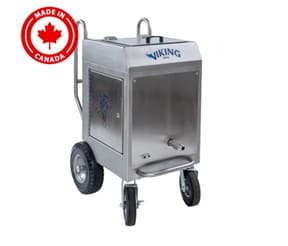
| Viking Mini | Contractors, Equipment Resellers | Portable | Compact, easy to transport and operate. Perfect for intricate work in tight environments. |
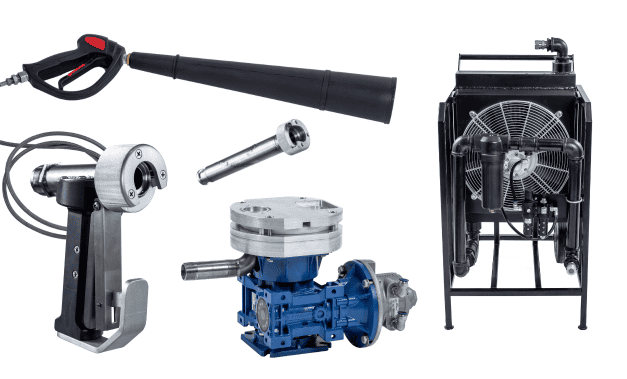
| Contractor’s Package | Contractors | Turnkey site solution | Includes the Viking 4000, an APU 450, accessories, hoses, nozzles, and components optimized for mobile work. Speeds up setup, simplifies training, and supports crews in variable conditions. |
| Factory & Manufacturer’s Package | Industrial Manufacturers, Factories | Integrated plant solution | Built around the Viking 4000 with components tailored to continuous-use environments. Compatible with upstream air systems, serviceable design, and uptime-focused configuration. |

What Sets Viking Dry Ice Blasting Machines Apart
When you’re investing in equipment for demanding environments, the details matter. Here’s what makes the Viking Series a reliable choice for professionals who can’t afford downtime.
Built for Real-World Conditions
The Viking Series was engineered for environments where performance is non-negotiable: construction sites, factory floors, processing plants, and restoration zones where conditions change quickly and failure costs real money.
The Viking Series was designed to meet the exact challenges that contractors and plant managers face every day. These machines are framed in heavy-gauge steel and reinforced to withstand knocks, transport, and long hours of operation in rough terrain.
From the ground up, everything about their build reflects durability: corrosion-resistant finishes, industrial-grade wheels, and components selected to handle repeated exposure to moisture, dust, and debris.
Engineered for Operator Efficiency
Durability alone doesn’t solve productivity problems, however. That’s why the Viking Series also prioritizes operational efficiency.
The Viking 4000 is equipped with a large-capacity hopper to reduce refill interruptions during long jobs. Feed rate and blast pressure controls are fully adjustable on all models, giving the operator precision when switching between delicate substrates and high-impact stripping tasks. Interchangeable nozzles expand that control further, allowing the same machine to handle tight corners one moment and broad surfaces the next.
Ready to Integrate into Your Workflow
Integration with existing infrastructure was also a design priority. These machines are built to pair seamlessly with standard industrial air prep systems and electrical setups found in facilities and job sites.
That compatibility reduces setup time and eliminates the hidden costs of buying add-ons to make your equipment work.
Support That Shows Up When You Need It
Equally important is what happens after the machine is on-site. Every Viking Series purchase includes access to Wickens’ support team. That means fast access to parts, technical guidance when issues arise, and real-time help when you need to keep a project moving.
Wickens also offers operator training, air preparation consultation, and optional maintenance plans; because the long-term performance of the machine depends just as much on proper use and upkeep as it does on specs.
A Smart Move for Resellers and Rental Programs
For resellers, Viking machines deliver real commercial value. These units hold up in the field, generate low callback rates, and carry a reputation for reliability that helps build trust with buyers.
They also maintain resale value thanks to their rugged construction and serviceability, making them ideal for rental fleets or resale programs.
Built from the Ground Up to Serve the Job
The Viking Series doesn’t just check boxes on a spec sheet. It reflects decades of experience working directly with professionals in disaster relief, industrial maintenance, and restoration. Every design decision supports the person using the machine and the job they need to finish without complications.
See the full dry ice blasters catalogue or request a demo to evaluate a Viking system in action.
Common Mistakes to Avoid When Buying Dry Ice Cleaning Machines
Even well-intentioned buyers can miss critical details during the evaluation process. These common mistakes often lead to performance issues, avoidable downtime, and poor ROI, especially in high-demand environments.
- Spending on features you don’t need: Investing in capabilities that don’t match your work adds cost without improving results and ties up budget that could be used elsewhere.
- Choosing a machine that can’t keep up: Undersized equipment, hopper capacity, or air volume slows crews down, causes delays, and forces workarounds that kill productivity.
- Overlooking air preparation needs: Even the best blasting machine will underperform if the air system isn’t properly matched, leading to weak output and inconsistent results.
- Skipping training your team: Without proper onboarding, crews risk damaging equipment, wasting time, or compromising safety.
- Buying without a support plan: Machines will need servicing. If parts, guidance, or local help aren’t easily available, you’re stuck when it matters most.
Pre-Purchase Dry Ice Blasting Equipment Evaluation Checklist
Before finalizing your equipment purchase, ask these questions:
- What are the PSI and CFM ranges?
- Is the feed rate adjustable?
- How large is the hopper?
- Is the frame industrial-grade?
- How easily can it be cleaned and serviced?
- What contaminants or surfaces is it optimized for?
- Is there a training program or operator manual?
- What kind of post-sale support is offered?
- Can I test the equipment through rental or demo?
- What does after-sales parts pricing look like?
Final Thoughts
Choosing a dry ice blasting machine isn’t about checking boxes on a spec sheet. It’s about ensuring the equipment you bring in supports your work, your crew, and your business over time. Job fit matters. So does reliability, serviceability, and the ability to get support when you need it.
The Viking Series was developed for professionals who work in demanding environments. Every feature is designed and built in Canada with a clear function: to help you deliver consistent results without interruption.
Supporting the Way You Work
Wickens doesn’t just supply equipment. We help your team choose the right machine for your needs, train operators, and stay up and running with local support when it counts. We work directly with contractors, facilities, and resellers that need equipment that holds up under pressure.
Request a demo or explore the Viking Series to see how the right machine can support your business.

- Choosing the Best Dry Ice Blasting Machine for Heavy-Duty Jobs - February 23, 2026
- Happy Holidays from the Wickens Team! - December 22, 2025
- 5 Expert Tips for Dry Ice Blasting Equipment Rental and Purchase - December 17, 2025




 If you’re looking into dry ice blasting equipment for your business, one of the first decisions you’ll face is whether to buy or rent. The right choice depends on how often you plan to use the equipment, what kind of jobs you’re tackling, and how much flexibility you need.
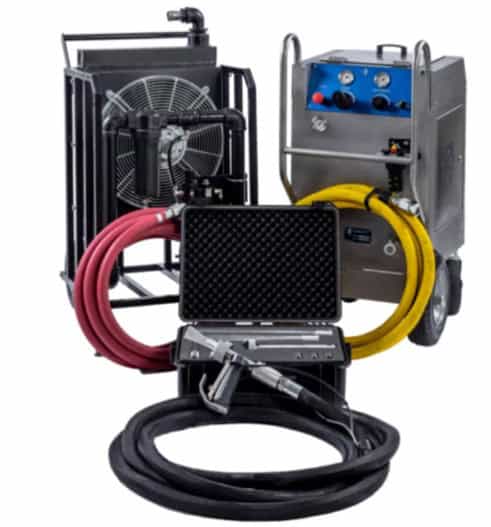 The Contractor’s Package
 The Factory & Manufacturer Package

Recent Comments